Showing posts with label Nasa News. Show all posts

Sunday, February 10, 2013

Asteroid 2012 DA14 - A Meteoric Close Shave Predicted


Depiction of the trajectory of asteroid 2012 DA14 on Feb 15, 2013. In this view,
we are looking down from above Earth's north pole.
Image credit: NASA/JPL-Caltech


*

There is a 150ft wide rock headed for Earth.   Traveling between 12,427mph (20,000kph) and 18,641mph (30,000kph), asteroid 2012 DA14 is expected to fly by, even closer than the orbits of high geostationary telecommunications and weather satellites.   Some of those satellites are 22,000 miles (35,406km) above Earth.   However, experts calculate that on February 15, 2013, 2012 DA14 will skim by Earth at a distance of approximately 17,200 miles (27,681km).

Well, that's a relief!   A 330ft meteor is believed to have been the cause of the 1908 explosion over a remote region of Siberia, known as Tunguska.   Although that object exploded a short distance above the ground, it generated a blast that was 1000 times more destructive than the A-bomb dropped on Hiroshima.   The 1908 explosion completely flattened 830 square miles (2,150 sq km) of Tunguska forest.

Don't put off getting those flowers, chocolates, or other Valentine treats for your honey.   2012 DA14 is predicted to be at it closest approach at approximately 1:30 PM Friday (the 15th), Texas time.  

-Sunny Williams

*

NASA's Near Earth Object Program, 2012 DA14 Earth Impact Risk Summary


NASA 2012 DA14 Flyby with videos


Near-Earth Asteroid 2012 DA14 to make extremely close approach in February 2013   


          *******************************************************

Tuesday, November 6, 2012

Know When The ISS Will Pass Over You

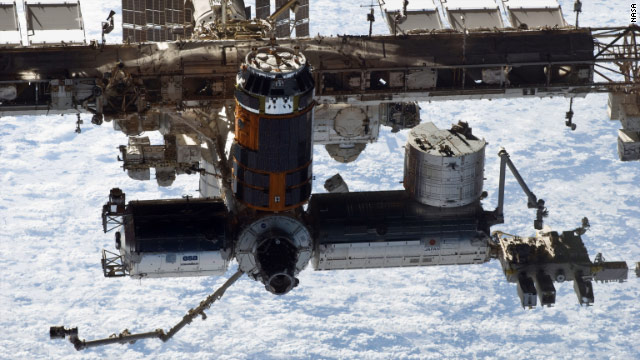
International Space Station


New!  Spot The Station

How many times have people witnessed a bright glowing object passing overhead, in the predawn or post sunset sky, then thought they had just seen a UFO?  Plenty!

Sure, there are things out there in the skies that can't be easily explained but many things are not definitely not of extraterrestrial origin.

The international Space Station is easily the third brightest object in the sky, just after the sun and moon.  If you know when and where to look, you can easily identify it as it passes by.

NASA now has "Spot the Station" service, which will send you an email or phone text message, a few hours before the space station passes over your house.

I just signed up for it.  It easy! 

Simply go to Spot The Station ( http://spotthestation.nasa.gov/ ), and choose your country, state and the closest city listed.  Supply your email address or phone number (SMS enabled phone required), then receive a code and finish registering.  That's it!

You can also choose the time of sightings your prefer, such as mornings, evenings, or anytime.

Or if you prefer, you can still go to NASA's Human Space Flight site and check the schedules.  Either way, enjoy!

-Sunny


            **************************************************

Wednesday, August 29, 2012

Kepler Finds A Stellar Duo With Multiple Planets

*
The planets Kepler-47b and Kepler-47c: Kepler-47b has three times the radius of earth and orbits the pair of stars in less than 50 days while Kepler-47c is thought to be a gaseous giant, slightly larger than Neptune with an orbital period of 303 days.
Credit: NASA/JPL-Caltech/T. Pyle

*

NASA's Kepler Discovers Multiple Planets Orbiting a Pair of Stars

(NASA) Coming less than a year after the announcement of the first circumbinary planet, Kepler-16b, NASA's Kepler mission has discovered multiple transiting planets orbiting two suns for the first time. This system, known as a circumbinary planetary system, is 4,900 light-years from Earth in the constellation Cygnus.

This discovery proves that more than one planet can form and persist in the stressful realm of a binary star and demonstrates the diversity of planetary systems in our galaxy.

Astronomers detected two planets in the Kepler-47 system, a pair of orbiting stars that eclipse each other every 7.5 days from our vantage point on Earth. One star is similar to the sun in size, but only 84 percent as bright. The second star is diminutive, measuring only one-third the size of the sun and less than 1 percent as bright.

"In contrast to a single planet orbiting a single star, the planet in a circumbinary system must transit a 'moving target.' As a consequence, time intervals between the transits and their durations can vary substantially, sometimes short, other times long," said Jerome Orosz, associate professor of astronomy at San Diego State University and lead author of the paper. "The intervals were the telltale sign these planets are in circumbinary orbits."

The inner planet, Kepler-47b, orbits the pair of stars in less than 50 days. While it cannot be directly viewed, it is thought to be a sweltering world, where the destruction of methane in its super-heated atmosphere might lead to a thick haze that could blanket the planet. At three times the radius of Earth, Kepler-47b is the smallest known transiting circumbinary planet.

The outer planet, Kepler-47c, orbits its host pair every 303 days, placing it in the so-called "habitable zone," the region in a planetary system where liquid water might exist on the surface of a planet. While not a world hospitable for life, Kepler-47c is thought to be a gaseous giant slightly larger than Neptune, where an atmosphere of thick bright water-vapor clouds might exist.

"Unlike our sun, many stars are part of multiple-star systems where two or more stars orbit one another. The question always has been -- do they have planets and planetary systems? This Kepler discovery proves that they do," said William Borucki, Kepler mission principal investigator at NASA's Ames Research Center in Moffett Field, Calif. "In our search for habitable planets, we have found more opportunities for life to exist."

To search for transiting planets, the research team used data from the Kepler space telescope, which measures dips in the brightness of more than 150,000 stars. Additional ground-based spectroscopic observations using telescopes at the McDonald Observatory at the University of Texas at Austin helped characterize the stellar properties. The findings are published in the journal Science.

"The presence of a full-fledged circumbinary planetary system orbiting Kepler-47 is an amazing discovery," said Greg Laughlin, professor of Astrophysics and Planetary Science at the University of California in Santa Cruz. "These planets are very difficult to form using the currently accepted paradigm, and I believe that theorists, myself included, will be going back to the drawing board to try to improve our understanding of how planets are assembled in dusty circumbinary disks."

Ames manages Kepler's ground system development, mission operations and science data analysis. NASA's Jet Propulsion Laboratory in Pasadena, Calif., managed the Kepler mission development.

Ball Aerospace & Technologies Corp. in Boulder, Colo., developed the Kepler flight system and supports mission operations with the Laboratory for Atmospheric and Space Physics at the University of Colorado in Boulder.

The Space Telescope Science Institute in Baltimore archives, hosts and distributes Kepler science data. Kepler is NASA's tenth Discovery Mission and funded by NASA's Science Mission Directorate at the agency's headquarters in Washington.

Source: NASA
More: NASA News Release


            **************************************************

Saturday, August 25, 2012

"That's one small step for man..." - First 'Moon Walker' Dies At 82

*

*

Neil Armstrong, first man on the moon, dead at 82

(CBS News) Neil Armstrong, the Apollo 11 astronaut who became the first human being to set foot on another world, has died. He was 82.

In a statement his family said Armstrong had passed away following complications resulting from cardiovascular procedures.

The family described him as a loving husband, father, grandfather, brother and friend, and also as "a reluctant American hero who always believed he was just doing his job."
That's one small step for (a) man, one giant leap for mankind.

When Armstrong set foot on the moon on July 20, 1969, he fulfilled the goal that had been set by President John F. Kennedy just eight years earlier.

It was a long, long way from Armstrong's birthplace near tiny Wapakoneta, Ohio in 1930.

Continue reading story...

See Video

Note: I recall watching the televised landing on the moon, felt a personal thrill and the pride of all America.


My heartfelt condolences to Armstrong's family, friends and to the U.S., for losing another hero.

The Eagle has flown to a distant point of light among the stars...

Neil Armstrong, thank you sir!  You will be sorely missed. -SW


            **************************************************

Tuesday, August 7, 2012

Curiosity Captures Descent to Mars

*


Video Link

*

On the evening of Aug. 5 (PDT; Aug. 6 EDT), NASA's rover Curiosity, landed inside Gale Crater, Mars.

The Gale Crater is a huge impact basin, 96 miles (154 kilometers) across.

As Curiosity made it's decent to the flat crater basin, the camera on the rover's underbelly captured hundreds of color photos of Mars. This video is a composite of those photos.

Other images may be viewed here.

Also visit Space.com for future videos, photos and more space news.


            ****************************************************

Tuesday, July 31, 2012

"Lay me down gently"- "Sky Crane" Set To Lower Curiosity Down to Mars Surface

*

High-stakes Mars mission relies on untried 'sky crane'

At first blush, using a rocket-powered flying crane to lower a $2.5 billion nuclear-powered rover to the surface of Mars seems risky at best. But engineers say it solves a host of daunting challenges.


The entry, descent and landing of the Mars Science Laboratory requires autonomous steering, a supersonic braking parachute and an innovative "sky crane" technique to lower the nuclear-powered rover to the surface of the red planet.
(Credit: NASA)


*
CNET News- The question is straightforward: how to get a car-size rover safely to the surface of Mars? And not just anywhere, but to a very precisely defined bull-s-eye on the floor of a broad crater, within roving distance of a 3-mile-high mountain.

In earlier ventures to Mars, spacecraft have either bounced to the surface cocooned in giant airbags or made the trip atop a rocket-powered descent stage. But neither approach was an option for NASA's Curiosity rover, the centerpiece of the $2.5 billion Mars Science Laboratory mission.

Tipping the scales at one ton, the nuclear-powered Curiosity, a rolling laboratory equipped with a suite of state-of-the-art cameras and instruments, is too massive to use airbags like the ones that cushioned the landings of NASA's much smaller Pathfinder and the hugely successful Spirit and Opportunity rovers.

While a legged lander could do the trick, powerful braking rockets would be needed to get Curiosity to the surface. The sheer size of the descent stage would result in a daunting engineering challenge: get a bulky rover safely down to the surface from a perch many feet above the ground atop its lander.

"This rover is 900 kilograms, it is a beast, it is the size of a car," said Steve Sell, an entry, descent and landing engineer at the Jet Propulsion Laboratory. "So you're trying to land something very heavy, so that means you need sizable engines."

More powerful rocket engines could kick up billowing clouds of dusty debris as the lander approached touchdown "so you tend to want to keep the engines farther away from the surface," Sell said.
"That makes you want to have longer legs, and having longer legs means your center of gravity is higher and then it's much easier to tip over," he said. "Or you need to be very wide. It tends to drive you [to a] larger and larger [lander] in order to do that and be stable."

Then there is the little matter of getting the rover down to the surface after landing.

"Let's say you solved all that and were able to land and you now had to drive a one-ton rover off the top of a platform, either down ramps or some other kind of mechanism," Sell said. "If you were oriented in a way that maybe wasn't favorable to your wheels, like you were tilted to your side, you could slide sideways off the ramps. Maybe there are rocks where the bottoms of the ramps would normally touch and you can't deploy the ramp in the first place."

Continue reading and view photos at CNET News.

            **************************************************

Wednesday, July 11, 2012

Vortex Discovered on Titan

*

Strange Vortex Discovered on Saturn Moon Titan


Photo of Titan's south polar vortex
This true color image captured by NASA'S Cassini spacecraft before a distant flyby of Saturn's moon Titan on June 27, 2012, shows a south polar vortex swirling in the moon's atmosphere.
CREDIT: NASA/JPL-Caltech/Space Science Institute

A NASA spacecraft has spied a vortex swirling in the atmosphere high above the south pole of the Saturn moon Titan, hinting that winter may be coming to the huge body's southern reaches.

NASA's Cassini probe photographed the polar vortex — or mass of swirling gas — during a flyby of Titan on June 27. The vortex appears to complete one full rotation in nine hours, while it takes Titan about 16 days to spin once around its axis.

"The structure inside the vortex is reminiscent of the open cellular convection that is often seen over Earth's oceans," Tony Del Genio, a Cassini team member at NASA's Goddard Institute for Space Studies in New York, said in a statement.

"But unlike on Earth, where such layers are just above the surface, this one is at very high altitude, maybe a response of Titan's stratosphere to seasonal cooling as southern winter approaches," he added. "But so soon in the game, we're not sure." [Gallery: Amazing Titan Photos]

When Cassini arrived at the Saturn system in 2004, Titan — which is 3,200 miles (5,150 kilometers) wide — had a vortex and a visible "hood" of relatively dense haze high above its north pole. It was winter there until Saturn's August 2009 equinox, which marked the arrival of spring in the northern hemisphere and fall in the southern reaches of the planet and its many moons. While Titan's northern hood still remains, the circulation in the upper atmosphere has been moving from the warming north pole to the cooling south, researchers said.
  Read more of this story at Space.com.             **************************************************

Friday, January 20, 2012

One Less Dirty Cosmic Snowball

*

Comet Hits Sun, Captured For The First Time (VIDEO)

*


Courtesy of HuffPost Science and Space.com.
Read more


            **************************************************

Sunday, January 8, 2012

Space News - January 8, 2012: ISS Crew Excited; New LRO Moon Photos; NASA Wants List Back

*

International Space Station by SW/LITS.

*

Space Station Crew Excited for 1st Private Spaceship Visit

Source: Space.com

The astronauts living on the International Space Station (ISS) are gearing up for a milestone event in February — the first visit of a commercial spaceship to the orbiting outpost.


The private spaceflight company SpaceX plans to launch its unmanned Dragon capsule to orbit Feb. 7 atop the firm's Falcon 9 booster from Cape Canaveral Air Force Base in Florida. The capsule will carry a load of food, clothing and other supplies for the six-man crew of the space station.

"We're excited about that," NASA astronaut Don Pettit told SPACE.com in an interview Wednesday (Jan. 4) from the station. "Anytime you have a visiting vehicle coming by, that's an exciting day."

Dragon's flight is partially funded by NASA's Commercial Orbital Transportation Services (COTS) program, which aims to stimulate the development of private spacecraft to carry cargo to the station now that NASA's space shuttle fleet is retired. [Gallery: Dragon, SpaceX's Private Spacecraft]

The Hawthorne, Calif.-based SpaceX is the first of a number of companies vying to fly test flights to the International Space Station. NASA has also awarded funding to the Orbital Sciences Corp. of Dulles, Va., which is developing the Cygnus spacecraft to fly on its Taurus 2 rocket.

Dragon is due to make an automated rendezvous with the International Space Station at about 240 miles (386 kilometers) above the Earth. Once it approaches within a few meters of the laboratory, astronauts inside will use the station's robotic arm to grab hold of the capsule and attach it to the outpost.

"It's going to be packed with all kinds of supplies for us, and it's sort of the first of many wagon trains coming up here to bring us supplies," Pettit said.

After being docked for about a week, Dragon will depart the space station, carrying cargo back down to Earth, where the capsule will be retrieved after landing in the Pacific Ocean.

Continue reading...

                    *                    *                    *

*

Photo taken by NASA's Lunar Reconnaissance Orbiter (LRO) shows high sunlight reflecting off the moon's Aristarchus crater.
CREDIT: NASA/GSFC/Arizona State University


*
Giant Moon Crater Revealed in Up-Close Photos

Source: Space.com

Spectacular new images of a gigantic crater on the moon were captured recently by a low-skimming NASA satellite.
In November 2011, the space agency's Lunar Reconnaissance Orbiter (LRO) spacecraft passed over the moon's Aristarchus crater, which spans 25 miles (40 km) and sinks more than 2 miles (3.5 km) deep. Photos and video of the crater from LRO's sweep were released Dec. 25.
The huge and highly reflective Aristarchus is easily visible with the naked eye. But the details shown in the new photos are a special treat from an extremely low flyover by LRO.

Continue reading...

                    *                    *                    *


*

NASA Questions Astronaut's Right to Sell Apollo 13 Memorabilia

NASA is questioning whether Apollo 13 commander James Lovell has the right to sell a 70-page checklist from the flight that includes his handwritten calculations that were crucial in guiding the damaged spacecraft back to Earth.

Continue reading...

LITS Notes:  My personal opinion is that if NASA wanted such documents back, they should have asked for them years ago.  Knowing what astronauts were paid back then, I think Lovell deserves to do with the list as he sees fit.

Would I like to see the list donated to the space museum?  Sure but possession is nine tenths of the law and NASA is pushing that one tenth for all it's worth...
-SW

                    *********************************************

Monday, January 2, 2012

NASA's Start of 2012 - Grail Twins Orbit the Moon

*

*

Twin NASA Moon Probes Start New Year by Entering Lunar Orbit

Space.com- A pair of NASA spacecraft are ringing in the new year in grand style, with both now successfully circling the moon after journeying through space for more than three months.

The Grail-B probe entered lunar orbit today (Jan. 1) after firing its main engine at 5:05 p.m. EST (2205 GMT) in a 40-minute-long orbital-insertion burn, NASA officials said. It joins its twin spacecraft, Grail-A, which arrived at the moon yesterday evening (Dec. 31) after completing a similar maneuver.

The two probes are on a mission to study Earth's nearest neighbor from crust to core. After gradually circling down to super-low orbits, the pair will zip around the moon in tandem, working together to map the lunar gravity field in unprecedented detail, researchers said.

Scientists expect the probes' measurements to help unlock some longstanding mysteries about the moon's composition and evolution— mysteries that have withstood more than 100 moon missions over the years.
"You might think that, given all of these observations, we would know what there is to know about the moon," Grail principal investigator Maria Zuber, of the Massachusetts Institute of Technology, told reporters Wednesday (Dec. 28). "Of course that's not the case."

The moon's many secrets

Scientists think the moon formed after a Mars-size body struck Earth about 4.5 billion years ago. This titanic impact blasted huge amounts of material into space, and they eventually coalesced.
While this basic outline of the moon's origin is pretty well established, many mysteries remain about how the rocky body has evolved since then.

Chief among these puzzles, perhaps, is why the near side of the moon — the face we always see from Earth — is so different from the far side. For example, plains of volcanic rock (called maria) are much more widespread on the near side, and the far side is higher and more mountainous, with the lunar surface 1.2 miles (1.9 kilometers) higher in elevation, on average, than the near side.

"We don't actually know why the near side and far side of the moon are different," Zuber said. "We think that the answer is locked in the interior."

One possible explanation, proposed by researchers this August, is that the gigantic collision 4.5 billion years ago actually created two moons. The second moon, which was much smaller, later slammed into our moon's far side, the idea goes, spreading itself over the surface rather than creating a crater.

The Grail probes' observations could help determine whether that scenario is accurate, researchers said.
"We believe that we can obtain the information that we need to test this hypothesis," Zuber said.

Formation flying

The $496 million Grail (short for "Gravity Recovery And Interior Laboratory") mission launched Sept. 10. The two washing-machine-size probes then spent more than three months making their slow, circuitous way to the moon.

By comparison, NASA's manned Apollo 11 mission in 1969 reached the moon in three days. But Apollo 11 prioritized speed, while Grail's path is energy-efficient and has given engineers ample time to assess the probes' health and charge up their scientific gear, researchers said.

Grail-A and Grail-B still have some work to do from their initial lunar orbits to get into position. They'll spend two months circling lower and lower, eventually settling into orbits just 34 miles (55 kilometers) above the lunar surface by March.

Only then will the twin spacecraft begin their science campaign. They'll chase each other around the moon for 82 days, staying 75 to 225 miles (121 to 362 km) apart. [Video: Grail's Mission to Map Moon Gravity]
Regional differences in the lunar gravity field will cause the two spacecraft to speed up or slow down slightly, changing the distance between them as they fly. Bouncing microwave signals back and forth off  each other, Grail-A and Grail-B will gauge these tiny distance variations constantly.

The Grail team will use the twin probes' measurements to construct highly detailed maps of the moon's gravitational field. These maps are expected to reveal a great deal about lunar composition, allowing scientists to draw insights about how the moon formed and how it has changed over time, researchers said.
Public outreach and education are a big part of the Grail mission. Each spacecraft is carrying four cameras and will snap photos of the lunar surface at the direction of middle-school students across the country. Students will get to pore over these pictures after they're beamed back down to Earth.

The photo project — which is called MoonKam and is run by former NASA astronaut Sally Ride — has already generated lots of enthusiasm. More than 2,100 schools have signed up to participate, according to Zuber.

"We've had a great response to the MoonKam project," Zuber said. "We're still accepting applications. We can accommodate another several hundred schools into the program if there's interest in doing that."

* Special thanks to Space.com.

            **************************************************

Friday, December 23, 2011

Science and Discovery News 12-23-2011

*

*

WISE Says 'Merry Christmas' With a Nebulous Wreath: Big Pic

Discovery News

Dec. 23, 2011 -- NASA's Wide-field Infrared Survey Explorer (WISE) is getting into a festive mood this Christmas after imaging a beautiful nebula called Barnard 3, or IRAS Ring G159.6-18.5. Nicknamed the "Wreath Nebula" by mission scientists, Bernard 3 does have some familiarity with the green and red wreath hanging peacefully on your neighbor's door. But looks can be deceiving.

BIG PICS: WISE Sees Sky in New Light


From 1,000 light years away, this nebula looks peaceful and serene, but it is actually the site of savage stellar winds blasting from the central bright star called HD 278942. These blizzard-esque winds have shaped the warm dust into a wreath-like ring, while the luminous star is likely the only energy source causing the ring to glow in infrared wavelengths (green).

The central red glow is most likely metal-rich gases being heated by HD 278942 -- if you use your imagination, this could resemble the red bow in the center of the wreath.

After adding a sprinkling of stars around the ring -- or, as mission scientists call them "silver bells" -- and you get a positively festive cosmic scene.  Merry Christmas!


-by Ian O'Neill

Image credit: NASA/JPL-Caltech/UCLA


            *

More News:

Spectacular Photos: Astronaut Sees Dazzling Comet From Space Station

600-Million-Year-Old Microscopic Fossils Upend Evolution Theory

Russia: 1 Up, 1 Down for Soyuz Raises Doubts on Space Program

Related: Russia Botches Another Rocket Launch


            **********************************************

Sunday, December 18, 2011

This Week's Science, Technology and Discovery News

*

Photo and video capture furious activity in Milky Way nebula 2,000 light-years away

*


(Space.com)  Just in time for the holidays, the Hubble Space Telescope has snapped a spectacular view of a star-forming region in our Milky Way galaxy that looks like a snow angel in deep space.

This region, called Sharples 2-106 (or S106 for short) is located nearly 2,000 light-years away in the direction of the constellation of Cygnus (The Swan). The nebula is found in a relatively isolated part of the Milky Way, researchers said.

The S106 nebula measures several light-years across, and contains vast clouds of gas that resemble outstretched wings amidst an hourglass shape. The light from the glowing gas is colored blue in this image. A video and photo of the "snow angel" based on Hubble's observations reveal a spectacular view of the cosmic sight.


Hubble's view captures furious activity in the nebula, with ridges and ripples of super-hot gas mixing with the cooler interstellar medium. A massive young star, called Infrared Source 4 or IRS 4, is responsible for this turbulence, scientists said.

Radiation from IRS 4 makes the lobes of gas glow bright blue in the image, as they stretch outward from the central star. Luminous red veins also appear throughout the nebula creating intricate patterns.

A ring of dust and gas around the star squeezes the expanding nebula into its apparent hourglass shape. Faint light from the central star reflects off tiny dust particles, making the surrounding environment glow, and revealing darker filaments of dust beneath the blue dust clouds, the researchers said.

Astronomers have studied S106 and found several hundred brown dwarfs, which are cool, failed stars. When the nebula is viewed in infrared wavelengths, more than 600 of these misfit stars appear, scientists said.

Brown dwarfs weigh less than a tenth of our sun, and because of this low mass, they are unable to trigger enough energy through nuclear fusion. These cosmic objects encompass the S106 nebula in a small cluster, the researchers said.

S106 was the 106th object to be cataloged by astronomer Stewart Sharpless in the 1950s, the researchers said.

The newly released image was taken by Hubble in February. The composite picture was created by stitching together two images taken in infrared light.

Follow Space.com for the latest in space science and exploration news on Twitter @Spacedotcom and on Facebook.

            *

More of This Week's Science News


            *********************************************

Wednesday, September 21, 2011

The sky is falling! No wait, that's a satellite...

Y'all better duck now, ya hear?

Huge Defunct Satellite Falling to Earth Faster Than Expected, NASA Says

An artist's concept of the Upper Atmosphere Research Satellite (UARS) satellite in space. The 6 1/2-ton satellite was deployed from space shuttle Discovery in 1991 and decommissioned in December 2005.
CREDIT: NASA


Space.com
- NASA space junk experts have refined the forecast for the anticipated death plunge of a giant satellite, with the U.S. space agency now predicting the 6 1/2-ton climate probe will plummet to Earth around Sept. 23, a day earlier than previously reported.

The defunct bus-size spacecraft is NASA's Upper Atmospheric Research Satellite (UARS), which launched in 1991 and was shut down in 2005 after completing its mission. The satellite was expected to fall to Earth sometime this year, with experts initially pegging a weeks-long window between late September and early October, then narrowing it to the last week of this month.

That window, NASA now says, has been trimmed to just three days.

"Re-entry is expected Sept. 23, plus or minus a day. The re-entry of UARS is advancing because of a sharp increase in solar activity since the beginning of this week," NASA officials wrote in a status update today (Sept. 16). The projection is a day earlier than a previous forecast released by NASA yesterday.

NASA spokeswoman Beth Dickey confirmed with SPACE.com earlier today that the reason UARS is expected to fall early in its re-entry window is because of the sharp uptick in solar activity. Solar effects from the sun can create an extra drag on satellites in space because they can heat the Earth's atmosphere, causing it to expand, agency officials have said. [Photos: Space Debris & Cleanup Concepts]


Where will UARS fall?

But exactly where the UARS spacecraft will fall is still unknown.

NASA expects at least 26 large pieces of the massive satellite to survive the scorching temperatures of re-entry and reach Earth's surface. Titanium pieces and onboard tanks could be among that debris, but the UARS satellite carries no toxic propellant (NASA used up all the fuel in 2005).

The debris is expected to fall over a swath of Earth about 500 miles (804 kilometers) long, NASA officials said. [Video: Where Could UARS Satellite Debris Fall?]

There is a 1-in-3,200 chance of satellite debris hitting a person on the ground, odds that NASA says are extremely remote. Outside experts agree.

"Look at how much of Earth is covered with water," Victoria Samson, the Washington Office Director of the Secure World Foundation, an organization dedicated to the peaceful use of outer space, told SPACE.com this week. "There's a really good chance it's going to go straight into the ocean."

Constant satellite watch

NASA officials expect the UARS satellite to fall over a region somewhere between the latitudes of northern Canada and southern South America, which leaves a vast swath of the world open as a possible re-entry point. About 75 percent of the Earth's surface is covered in water, which makes an ocean splashdown likely, NASA and experts have said.

NASA and the Joint Space Operations Center of U.S. Strategic Command at Vandenberg Air Force Base, Calif., are keeping a close watch on the falling satellite, but will only be able to pinpoint its actual crash zone to within about 6,000 miles (10,000 km) about two hours before re-entry.

As of Thursday, the UARS satellite was flying in an orbit of between 143 and 158 miles (230 to 255 km) above Earth. That orbit is dropping lower each day, NASA officials said. [Infographic: NASA's Falling UARS Satellite Explained]

NASA has advised the public not to touch any debris that may reach the surface, should it be discovered. Instead, the space agency says that anyone who finds satellite debris should contact their local law enforcement agency.

The $750 million UARS mission was designed to measure ozone and other chemical compounds found in Earth's ozone layer in order to better understand how the upper atmosphere affects our planet. It also recorded wind speeds and temperatures in the stratosphere, as well as the energy Earth received from the sun.

To follow NASA's UARS satellite updates, click here.

This report was updated to reflect new estimates of the UARS re-entry released by NASA after this story first appeared.


Read more of the story, photos and videos.


Editor's Note: See the latest on the UARS satellite re-entry as of Sept. 19 here - NASA: Huge Defunct Satellite Will Fall to Earth This Week


          **********************************************

Tuesday, August 30, 2011

NASA NEWS and Commentary

A Russian Soyuz rocket launches the unmanned Progress 44 cargo ship from Baikonur Cosmodrome on Aug. 24, 2011 to deliver fresh supplies to the International Space Station. The rocket and spacecraft crashed in eastern Russian just over five minutes after liftoff.
CREDIT: RSC Energia


Space Station Crew Closely Watching Russian Rocket Crash Investigation


Space.com-  Astronauts on the International Space Station are keeping a close eye on the investigation into the recent crash of a Russian rocket in order to learn how it will impact their mission in orbit.
The Soyuz rocket was carrying Russia's Progress 44 supply ship for the International Space Station, which was expected to deliver 3 tons of supplies to the orbiting lab's six-man crew. Instead, the rocket and cargo ship crashed in eastern Russia after a malfunction in the booster's third stage forced an engine shutdown.

"It's a pity the launch of Progress resupply vehicle didn't go well. Experts have worked on the investigation of its various impacts," station astronaut Satoshi Furukawa of Japan wrote on Aug. 26, two days after the crash, on Twitter, where he posts updates about his mission as @Astro_Satoshi. "But, as there are plenty of supplies to support the crew, we'll be fine for a while."


Since Russia's Federal Space Agency uses similar versions of its Soyuz rocket design to launch unmanned Progress vehicles and its crewed space capsules, officials want to make sure that they are safe to carry astronauts and cosmonauts. The next Soyuz to ferry a crew to the station was slated to launch Sept. 22 to replace three astronauts who are due to return home on Sept. 8.

Those plans may now change, the astronauts said. It's possible that the launch of the new station crew will be delayed until the crash investigation is complete, and that may force the three returning crewmembers to stay in orbit longer than planned.

"We don't have a lot of decisions made yet because we want to make sure we have the right course of action," station astronaut Ron Garan, of NASA, told SPACE.com from orbit Thursday (Aug. 25). "So we're going to take a little bit of time to think about it and make sure we have all the facts together before we go on and have a game plan." [Video: Station Crew Discusses Rocket Crash with SPACE.com]

Garan is one of the three astronauts who would have to extend their stay on the space station. They were due to land next week to end a six-month spaceflight.

"Up here, we're in kind of a wait-and-see mindset," Garan said. "We're fully prepared to support whatever decisions are made."

NASA will hold a press conference today at 10 a.m. EDT (1400 GMT) with the latest on the crash's impacts on the space station crew.


Russian rocket inquiry
Before the Progress 44 crash, Russia was expected to launch four Soyuz rockets —two carrying new crews and two with unmanned Progress cargo ships — as part of the regular flight schedule.

If the investigation into last week's rocket crash isn't completed quickly, NASA and its space station partners may consider cutting the orbiting lab's crew size in half, from six people to three,  or even leaving the space station unmanned for a time until flights can be resumed, station managers have said. Space station flight planners have until October to decide to shift down to a three-person crew, they added.

[Photos: Building the International Space Station]

"If things extend too long, which we don't have any indication today that's the case but given the anomaly we have to be prepared, there is an ability to operate station with less than six crew if that becomes necessary," NASA's space station program manager Mike Suffering told reporters last week just after the rocket crash.

With NASA's space shuttle fleet retired (the final flight was in July), Russia's Soyuz space capsules are the only vehicle currently ferrying astronauts to and from the International Space Station. Robotic cargo ships built by Russia, Japan and the European Space Agency also make deliveries to the orbiting lab.

NASA currently has contracts with two private U.S. spaceflight companies, SpaceX and Orbital Sciences, to provide unmanned cargo deliveries to the station in the next few years. Test flights for those vehicles are expected in the coming months. NASA also plans to eventually use commercial spacecraft for astronaut launches, too.

However, Russia's string of rocket and satellite failures in the last year that has caused some concern among U.S. lawmakers and experts since the country is also the sole avenue for American spaceflight until the new private spaceships become available.

Suffredini said he is confident NASA's Russian partners will find the cause of the Soyuz rocket malfunction and resume flights as soon as it is safe to do so.

"We're trying, right now, to give our Russian colleagues time to collect the data," Suffredini said. "Really, what you need right now is time."


Space station crew size cut ahead?
The space station currently has enough supplies to support a full, six-person for about 50 extra days beyond the scheduled Sept. 8 return of Garan and his crewmates, Suffredini added. There are enough supplies to support a smaller crew through at least March 2012, when the next European space freighter is due at the station, he said.

Suffredini also said that, barring an unforeseen major system or equipment failure, the space station could be even be flown without a crew for up to a year. Such a move, however, would be unprecedented.

The $100 billion space station has been continuously inhabited by crews of various sizes, from two-person skeleton crews to a full complement of six, since the first crew took up residence in 2001. The space station was completed earlier this year after more than a decade of orbital construction. It is larger than a football field and can be easily spotted by observers on Earth at night if they have clear skies and know where to look.

Space station officials are hopeful Russia's Soyuz rocket crash will be solved in time for the next scheduled launch of a Progress cargo ship, which is slated for late October.

On the space station, the astronauts said they, too, are confident that Russia's rocket issues will be solved, and that they are ready for any challenges, be it a decision to extend the current crew's mission or cut the station crew size in half temporarily.

"Obviously, I would have mixed feelings … I mean I've been away from home for a long time. But a lot of people are away from home doing things that they believe in," Garan said, adding that at the very least he'd have more time to share his spaceflight experience with people on Earth.  "So there's an upside and a downside and whatever the decision is, I think it will be what's best for the program and we'll fully support it."

Read more here.


             *                   *                     *

'Suitcase' Nuclear Reactors to Power Mars Colonies


Image credit: NASA


Discovery News-  Nuclear power is an emotive subject -- particularly in the wake of the Fukushima power plant disaster after Japan's March earthquake and tsunami -- but in space, it may be an essential component of spreading mankind beyond terrestrial shores.

On Monday, at the 242nd National Meeting and Exposition of the American Chemical Society (ACS) in Denver, Colo., the future face of space nuclear power was described. You can forget the huge reactor buildings, cooling towers and hundreds of workers; the first nuclear reactors to be landed on alien worlds to support human settlement will be tiny.

Think less "building sized" and more "suitcase sized."

"People would never recognize the fission power system as a nuclear power reactor," said James E. Werner, lead of the Department of Energy's (DOE) Idaho National Laboratory.

"The reactor itself may be about 1 feet wide by 2 feet high, about the size of a carry-on suitcase. There are no cooling towers. A fission power system is a compact, reliable, safe system that may be critical to the establishment of outposts or habitats on other planets. Fission power technology can be applied on Earth's Moon, on Mars, or wherever NASA sees the need for continuous power."
Tumbleweed WATCH VIDEO: New concepts for Mars-probing rovers would use Martian wind to move around the planet.

Obviously, this will be welcome news to Mars colonization advocates; to have a dependable power source on the Martian surface will be of paramount importance. The habitats will need to have a constant power supply simply to keep the occupants alive. This will be "climate control" on an unprecedented level.

Water extraction, reclamation and recycling; food cultivation and storage; oxygen production and carbon dioxide scrubbing; lighting; hardware, tools and electronics; waste management -- these are a few of the basic systems that will need to be powered from the moment humans set foot on the Red Planet, 24 hours 39 minutes a day (or "sol" -- a Martian day), 669 sols a year.

Fission reactors can provide that.

However, nuclear fission reactors have had a very limited part to play in space exploration up until now. Russia has launched over 30 fission reactors, whereas the US has launched only one. All have been used to power satellites.

Radioisotope thermoelectric generators (RTGs), on the other hand, have played a very important role in the exploration of the solar system since 1961.

These are not fission reactors, which split uranium atoms to produce heat that can then be converted into electricity. RTGs depend on small pellets of the radioisotope plutonium-238 to produce a steady heat as they decay. NASA's Pluto New Horizons and Cassini Solstice missions are equipped with RTGs (not solar arrays) for all their power needs. The Mars Science Laboratory (MSL), to be launched in November 2011, is powered by RTGs for Mars roving day or night.

RTGs are great, but to power a Mars base, fission reactors would be desirable because they deliver more energy. And although solar arrays will undoubtedly have a role to play, fission reactors will be the premier energy source for the immediate future.

"The biggest difference between solar and nuclear reactors is that nuclear reactors can produce power in any environment," said Werner. "Fission power technology doesn't rely on sunlight, making it able to produce large, steady amounts of power at night or in harsh environments like those found on the Moon or Mars. A fission power system on the Moon could generate 40 kilowatts or more of electric power, approximately the same amount of energy needed to power eight houses on Earth."

"The main point is that nuclear power has the ability to provide a power-rich environment to the astronauts or science packages anywhere in our solar system and that this technology is mature, affordable and safe to use."

Of course, to make these "mini-nuclear reactors" a viable option for the first moon and Mars settlements, they'll need to be compact, lightweight and safe. Werner contends that once the technology is validated, we'll have one of the most versatile and affordable power resources to support manned exploration of the solar system.

Sadly, I suspect the biggest hurdle facing space fission power won't be the viability of its technology, but the bad press nuclear power receives, on Earth and in space.

Read more here.


************************************************

Wednesday, June 29, 2011

NASA News: Fears And Near Misses

Fears arise as last shuttle mission nears


Video Link


NBC NEWS- The last space shuttle mission is only ten days away.

The cargo has arrived at the launch pad.

Technicians have eased the cargo carrier into the shuttle's 60-foot cargo bay.

There's a year's supply of food for the space station crew, as much as the ship can carry.

The importance of this flight was a major topic at an all-day flight readiness review Tuesday, the last one ever.

Mission managers examined a potential leak that was found during a fueling test two weeks ago, and said it was a good thing it was found; it likely would have caused a week's delay in the launch.

Problems on the last mission - a landing gear fire and the appearance of some debris during liftoff - are not expected to reoccur.

Only four astronauts will be onboard, because there is no backup shuttle to come to their rescue.

They would go home one by one on Russian Soyuz capsules over the next year if Atlantis is damaged during launch.

Most of what this mission is about is leaving the space station crew able to survive without regular shuttle flights anymore.

This flight of supplies is crucial to the crew of the International Space Station, because no one knows how reliable new spaceships planned by private industry will be.

     *

This follows on the heels of Tuesday's near mishap, when space debris came perilously close to the ISS.


(CNN) -- Tuesday's space debris incident at the International Space Station was the "closest anything has come to the space station," NASA said Wednesday.

Final calculations showed the unknown object passed the space station 1,100 feet away and its source remains a mystery, according to Kelly Humphries, a spokesman at the Johnson Space Center in Houston, Texas.

When the unexpected space debris came flying close to the space station Tuesday, it prompted the station's six astronauts to take shelter inside two Soyuz capsules, NASA said.

NASA does not expect any other close calls with this particular debris, said Humphries.

Russia's Interfax news agency said preliminary data on "the dangerous approach" shows that the "trash" came within about 250 meters (820 feet) of the station.

Officials at NASA are investigating what the debris was, NASA spokesman Joshua Buck said.

By the time it was spotted, it was "too late to make an avoidance maneuver," so NASA ordered the six crew members to "shelter in place," Buck said. About 7:30 a.m. ET, the crew members climbed into the two Soyuz capsules positioned at the station.

NASA determined that the debris would come closest to the station at 8:08 a.m. ET.

Three minutes later, at 8:11 a.m. ET, the all-clear was sounded and astronauts were allowed to exit the capsules, Buck said.

Buck described the debris as an "unknown object of unknown size."


     *

Note:  Now there is confidence for you and to top it off, doesn't NASA (and NORAD) track most of the space junk up there?  Just how did a piece of junk (an "unknown object of unknown size") sneak up on them, or was it even debris? 

Sounds like space whale poop to me.

And speaking of fears, NASA's Director has something to tell us all:

A Warning From NASA


Video Link

Note:  Talk about cryptic, is this guy trying to insinuate that something bad could happen?  What are they going to do, what till the last minute and say, "oh, by the way..." 

Should we get ready to duck and cover?  And just what is it they are not telling us? -SW

***********************************************

Monday, June 27, 2011

All clear! Asteroid MD 2011 passes on by

On June 27, 2011 at approximately 1:00 p.m. EDT, asteroid MD 2011 zipped on past Earth without incident.


Video Link


"A near-miss asteroid has the Twitterverse wondering: Just how close will it come to hitting Earth? Designated "2011 MD," the space rock was first detected on June 22 by LINEAR—MIT's Lincoln Near-Earth Asteroid Research center—and will miss the planet by just 7,500 miles. The asteroid is believed to be between 8 and 18 meters, about the size of a small house, and will next approach us in 2022. But even if our orbits intersect, it's likely to explode in our upper atmosphere, doing relatively little damage."

     *

Bus-Sized Asteroid Barely Misses Hitting Earth

ABC World News-  A small asteroid, estimated between 16 and 65 feet in diameter, whipped past Earth this afternoon – missing by a mere 7,600 miles.

Asteroid 2011 MD approached Earth at 1 p.m. EDT a full three and-a-half hours later than astronomers first predicted, the AP reports.

The space agency had earlier predicted no probability of the asteroid striking the Earth. NASA's @AsteroidWatch tweeted last week: "There is no chance that 2011 MD will hit Earth but scientists will use the close pass as opportunity to study it w/ radar observations."

But according to NASA, the asteroid was in a very earth-like orbit about the Sun, closer to the Earth than the Moon. And for a brief time, NASA predicted that the rock would be bright enough to be seen with even a modest-sized telescope.

Diagrams from the space agency indicate that the location of closest approach for Asteroid 2011 MD was between the southern tip of South Africa and Antarctica. But astronomers from Australia, New Zealand, Southeast Asia and the western Pacific were expected to see the approach, according to Wired.com.

Peter Lake blogged from Australia that he captured images of the asteroid streaking across on the sky on the evening of June 26. According to Lake's blog, his photos were taken using a 20-inch telescope in New Mexico controlled with his iPhone.

"Its not every day, that an asteroid misses by less than 3-5 earth Radii," Lake wrote on his blog.

While Asteroid 2011 MD was the most recent flyby, it is not the closest.

NASA reported that on Feb. 4, Asteroid 2011 CQ1 zipped past Earth at a record close distance: a scant 3,400 miles away. It was discovered by NASA only 14 hours before the rock approached Earth.

Asteroid 2011 MD was discovered only four days prior to its approach on June 22 by the Lincoln Near Earth Asteroid Research discovery team in New Mexico.

NASA said that an object the size of Asteroid 2011 MD is expected to come this close to Earth about every six years on average. Scientists say that when Asteroid 2011 MD makes another pass in 2022, an impact with Earth is possible.

A larger, 1,300-foot asteroid, Asteroid 2005 YU55, is expected to flash past Earth on Nov. 8, 2011.

Read more.

     *

Note:  Well then, let's hope that 2005 YU55 passes on by as well!  A "1300 footer" doing a slam dunk on old Mother Earth could really ruin one's whole day. -SW

*********************************************

Sunday, June 26, 2011

NASA's 'DAWN' on final approach to Vesta

Depiction


"Vesta and Ceres, the two largest objects in the asteroid belt, have mystified scientists for centuries. With NASA satellite Dawn on final approach to Vesta, the wait is almost over."

CSmonitor- After four years and 1.7 billion miles – including two swings around the sun – NASA's Dawn spacecraft is on final approach to Vesta, an object expected to provide an unprecedented glimpse into the early years of the solar system.

Dawn, with its futuristic ion-drive engine, is just over 100,000 miles from its target – closing in at the stately pace of about 260 miles an hour, relative to Vesta's orbital speed.

The craft is scheduled to take up its orbit July 16 and spend a year at Vesta. Then it heads for a year-long visit to Ceres, slated to begin in 2015, said Robert Mase, Dawn's project manager, during a final-approach briefing Thursday.


Read more of the story here:
NASA's Dawn satellite has reached the asteroid belt. First stop: Vesta.

     *

Note: Welcome to my thoughts.  With Asteroid MD 2011 on it's approach towards Earth, people in South America, Australia, New Zealand, etc., will get a glimpse of the house-sized asteroid, as it hopefully swings past Antarctica at a mere 7500 miles distant. 

Everyone be sure to hold your breath on Monday, June 27, 2011, at 1:00 p.m. EDT.  That's when MD 2011 will either swing on past or make a "pit stop".

You know, I love exploring.  I started out as a child, exploring the universe or at least my tiny corner of it and I am still doing so today, many, many years later.  You don't need to know how many.

Exploration is good.  Seeking new truths, finding something no one else has ever seen before... totally exhilarating.  However, don't you think that at least part of that 1.7 billion dollars could be spent on finding a way to steer errant asteroids and other space bodies away from Earth?

Just wondering...

-SW (Sunny)

**********************************************

Saturday, June 25, 2011

Asteroid to pass dangerously close to Earth June 27, 2011


Small asteroid to whip past Earth June 27
At closest approach, the asteroid will pass only 7,500 miles (12,000 km) above Earth's surface.
By NASA/JPL


Near-Earth asteroid 2011 MD will pass only 7,500 miles (12,000 kilometers) above Earth's surface Monday, June 27, at about 9:30 a.m. EDT. The asteroid was discovered by the LINEAR near-Earth object discovery team observing from Socorro, New Mexico.

The top diagram shows the trajectory of 2011 MD projected onto Earth's orbital plane over a 4-day interval. The diagram below it gives another view from the general direction of the Sun that indicates that 2011 MD will reach its closest Earth approach point in extreme southern latitudes (in fact, over the southern Atlantic Ocean).

This small asteroid, only between 15 and 65 feet (5 and 20 meters) in diameter, is in a very earthlike orbit about the Sun, but an orbital analysis indicates there is no chance it will actually strike Earth on Monday. The incoming trajectory leg passes several thousand kilometers outside the geosynchronous ring of satellites and the outgoing leg passes well inside the ring. One would expect an object of this size to come this close to Earth about every 6 years on average. For a brief time, it will be bright enough to be seen even with a modest-sized telescope.

For more observing information for asteroid 2011 MD, visit the International Astronomical Union's Minor Planet Center website.

     *

Note:  Let me play "Chicken Little" for one moment.  This could explain all the fireball/meteor activity of late, yet how can they say that *asteroid 2011 MD* will miss us, when there are so many uncertainties? 
If there were to be an impact, the ocean is definitely my choice but the ensuing Tsunami would be catastrophic!

*********************************************

LinkWithin

Related Posts Plugin for WordPress, Blogger...